Jensen Huang’s Viral Microduck Demo Sparks 20,000 Preorders in 24 Hours
Nvidia CEO’s playful demonstration of open-source robot ducks at GTC Berlin has turned them into a potential holiday sensation, raising questions about the commercial viability of consumer robotics.
By Jonathan Pierce ·
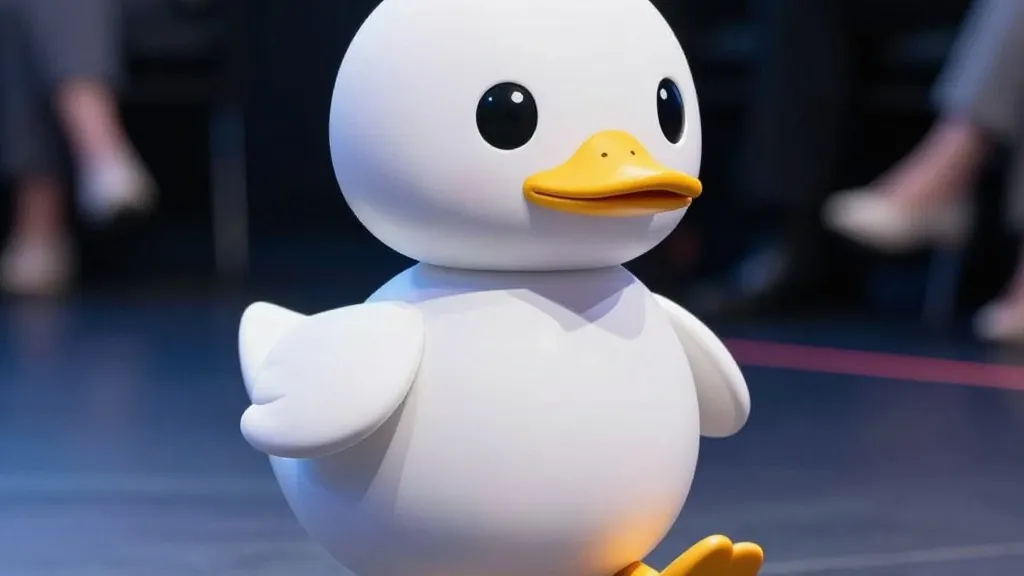
The rapid ascent of the Microduck to viral fame began with a moment of levity during Nvidia’s GTC Berlin conference earlier this week. Jensen Huang, the company’s chief executive, was captured on camera interacting with a flock of small, waddling robots. The footage, which showed the devices executing a series of programmed behaviors including sitting, falling into a simulated sleep, and performing somersaults upon voice command, circulated widely across social platforms. By the following day, the momentum translated into concrete commercial demand, with Hugging Face’s CEO Clem Delangue reporting that preorders had exceeded 20,000 units in just a single day.
The numbers suggest a significant shift in consumer interest for consumer-grade robotics. The 20,000 unit pre-order figure, confirmed by Delangue via a public tweet, indicates that the initial curiosity sparked by the keynote video is converting into actual purchases. Given that the devices are slated for delivery in time for the Christmas season, this velocity in sales could position the Microduck as one of the most sought-after gadgets of the holiday period. The speed of adoption is notable, particularly for a product that relies on a relatively recent acquisition by a major technology firm.
The people central to this narrative include Jensen Huang, whose personal involvement in the demonstration provided a high-profile endorsement, and Clem Delangue, who oversees the parent company Hugging Face. Delangue has expressed an optimistic view on the product’s trajectory, suggesting it may become the best-selling robot of the year. Interestingly, he noted that the primary demographic might not be children, as promotional materials feature adults engaging with the devices. This observation challenges the traditional assumption that small, cute robots are exclusively toys for the young, pointing instead to a broader appeal among hobbyists and tech enthusiasts.
The corporate structure behind the Microduck is a complex layer of recent mergers and acquisitions. The robots are open-source devices originally produced by Pollen Robotics, a company that was acquired by Hugging Face in 2025. Subsequently, Nvidia purchased Hugging Face in September of this year. This chain of ownership means the Microduck is now technically an Nvidia product, albeit one developed by a subsidiary. It is worth noting that this is not Hugging Face’s first foray into physical robotics; the company previously released the Reachy Mini, another compact robot that received similar attention for its design and capabilities.
The technical foundation of the Microduck relies heavily on Nvidia’s existing infrastructure. The devices were trained using the GPU giant’s technology stack, which involves simulating the robots in digital environments to teach them fundamental movements such as walking, sitting, and standing. These pre-loaded behaviors are what users experience out of the box. However, the open-source nature of the hardware allows for deeper engagement. Pollen Robotics has indicated that owners can teach their specific units new tricks and subsequently share these custom programs with the wider community, creating a potential ecosystem of user-generated content and behaviors.
The stakes for this product extend beyond simple novelty. In a week where the artificial intelligence industry faced significant scrutiny over its role in a series of high-profile cyberattacks, the Microduck offers a contrasting narrative. The industry has been grappling with the perception that AI can be a source of systemic risk and complexity. The viral success of a cute, harmless robot demonstrates that the technology can also be approachable and entertaining. For Nvidia and its newly acquired subsidiaries, this success could validate the strategy of bringing AI into the physical, consumer space, potentially opening a new market segment that is distinct from enterprise data centers.
The timing of the launch is critical. With delivery expected before the holidays, the Microduck has a narrow window to establish itself as a top-selling item. The combination of high-profile executive endorsement, a low barrier to entry through open-source design, and a distinctively appealing physical form factor creates a unique market position. While the 20,000 preorders are a strong start, the ultimate test will be whether the product can maintain its appeal beyond the initial hype cycle driven by the GTC Berlin keynote.
As the industry looks toward the future, the Microduck represents a tangible experiment in consumer robotics. It leverages the computational power of Nvidia to create an interactive experience that is accessible to the average user. The success of this device could influence how other major tech companies approach the development of consumer-facing AI hardware. For now, the focus remains on fulfilling the orders that have already been placed, ensuring that the devices arrive in time to be part of the holiday season, and watching how the community evolves the capabilities of the robots through shared training data.
Source: TechCrunch