The iPod revolutionized portable music 25 years ago
The iPod changed how people carried and played music, marking a turning point in digital devices.
By Daniela Vargas ·
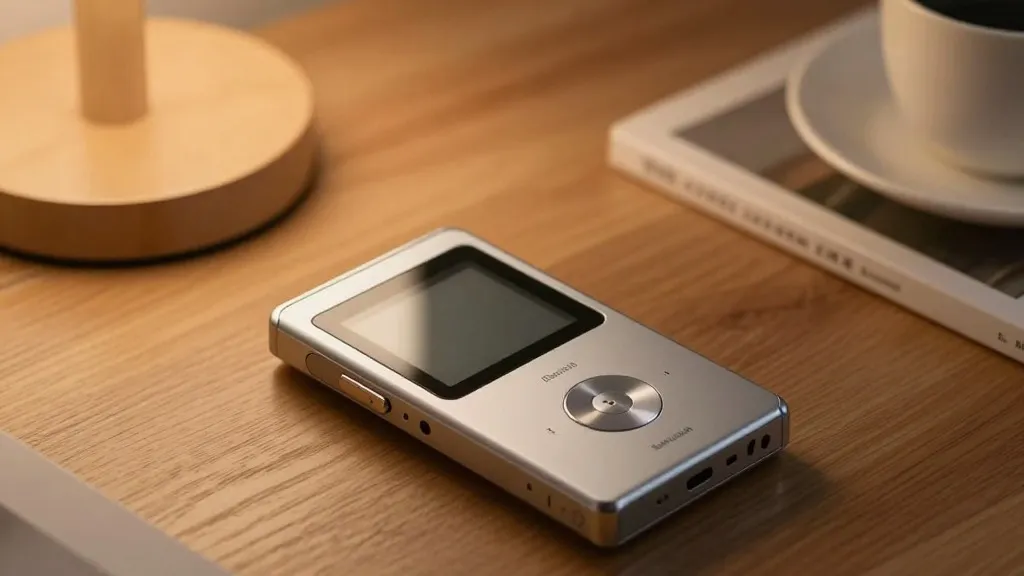
The iPod revolutionized portable music 25 years ago. The original Apple iPod debuted on this day in 2001, and Steve Jobs introduced it as a breakthrough digital device that was not a Mac. It was a pocket-sized digital music player that could store 1,000 songs in a package the size of a deck of cards, with 5 gigabytes of storage. This device fit a typical pop-song length MP3 at 160Kbps and was priced at $399. Jobs predicted that the Mac could become the center of your digital lifestyle, and the iPod was part of this vision as a hub uniting digital cameras, digital camcorders, DVD players, and the portable music player. Apple decided to go down this avenue as everyone loves music and it’s a huge target market, without a market leader, reasoned the CEO.
The iPod was introduced as an MP3 music player, offering CD-quality sound, capable of playing all the popular formats of the time (MP3, WAV, AIFF). The Apple CEO then sketched out three big claims that would make the iPod a winner. First, its ultra-portable form factor made it desirable. This aspect of the design was aided by Toshiba’s newest ultra-compact and ultra-thin hard drive at 1.8 inches in diameter and 0.2 inches thick. The actual device would be the size of a deck of cards, 2.4 x 4 x 0.78 inches, with a weight of 6.5 ounces, “lighter than most cell phones.” Despite its compact size, the iPod offered advanced features like 20-minute skip protection, fast file transfers, and charging via a single FireWire 400 cable. The iPod was heralded as the “first and only music player with FireWire.” The connection was fast enough to transfer an entire CD to the device “in five to 10 seconds,” according to Jobs’ presentation. The USB connections of the same era would keep you waiting around five minutes for the same single CD of MP3s data transfer to complete, it was claimed. To fill the iPod (1,000 songs), it was estimated it would only take 10 minutes vs. five hours for a USB digital music player.
A rechargeable lithium-polymer battery in the first iPod offered 10 hours of continuous music playback. An empty battery could be recharged to 80% in one hour, Apple said. Secondly, the iPod benefitted from “an amazing Apple design,” with minimal and durable back and sides, noted Jobs. It was touted to offer “Apple’s legendary ease of use” in a portable music player. Its specially designed controls were single-hand friendly, with an accelerated scroll wheel using a piezoelectric clicker for tactile feedback. It enabled the fast location and playback of music by playlist, artist, or song. Quiz fans, the first song demoed on stage was 'Building a Mystery' by Sarah MacLachlan.
The third breakthrough for the iPod claimed by Jobs was its Auto-Sync with iTunes digital music libraries feature. iTunes 2 launched on the same day with several advanced features like MP3 CD burning and syncing support for the new music player. However, the Auto-Sync meant that the libraries you created, customized, and curated on your Mac would always be synced with your pocket player when you connected to transfer music or charge. The iPod also doubled as a FireWire HDD. The first iPhone launched over five years later, in early 2007. Both devices would sit alongside each other in the Apple product stack for over a decade. However, the iPod’s star inevitably faded, with the final model being the 7th-generation iPod Touch in May 2019. The product line was left unmaintained but was only officially discontinued in May 2022.
Source: Tom's Hardware